




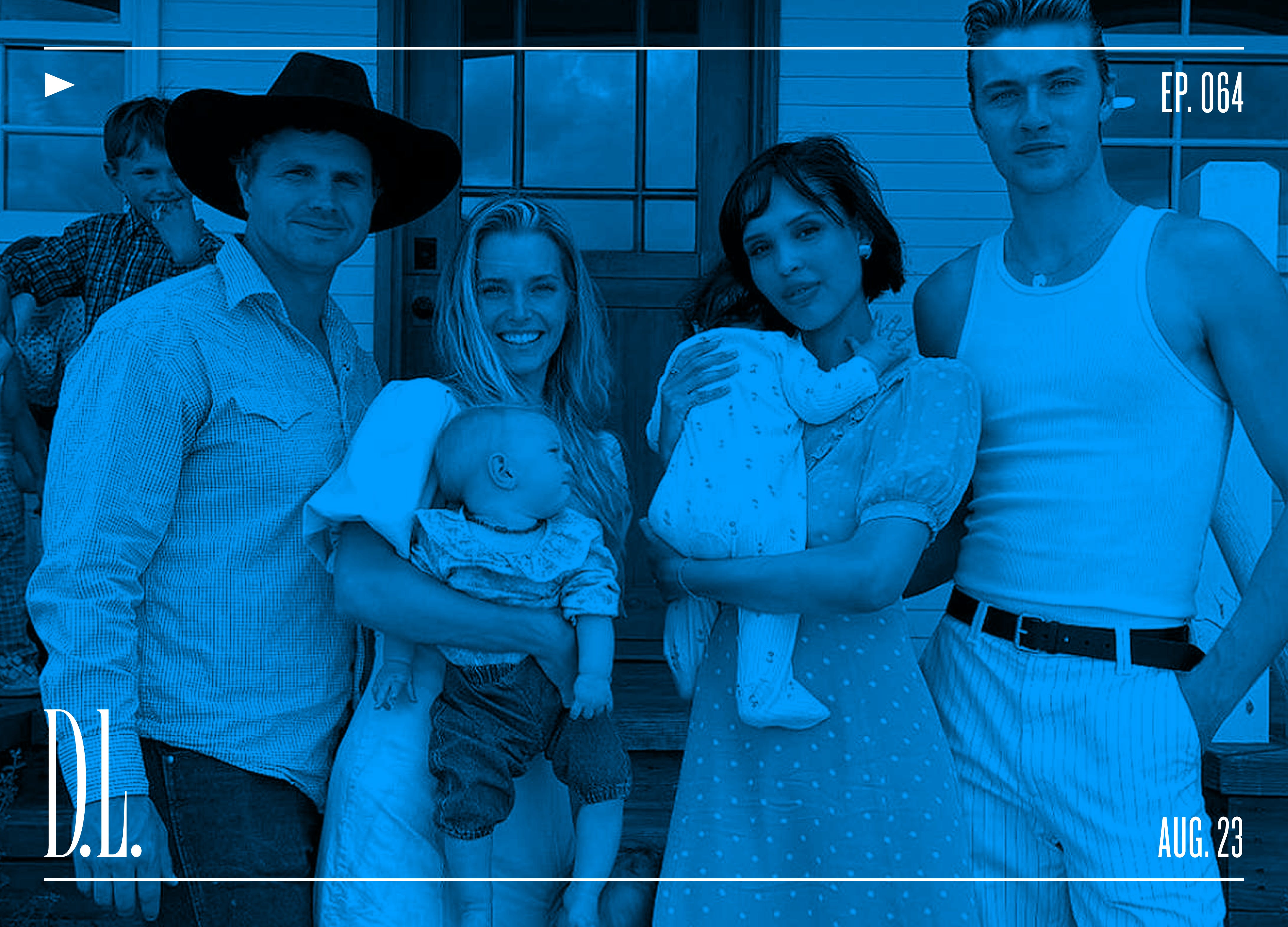

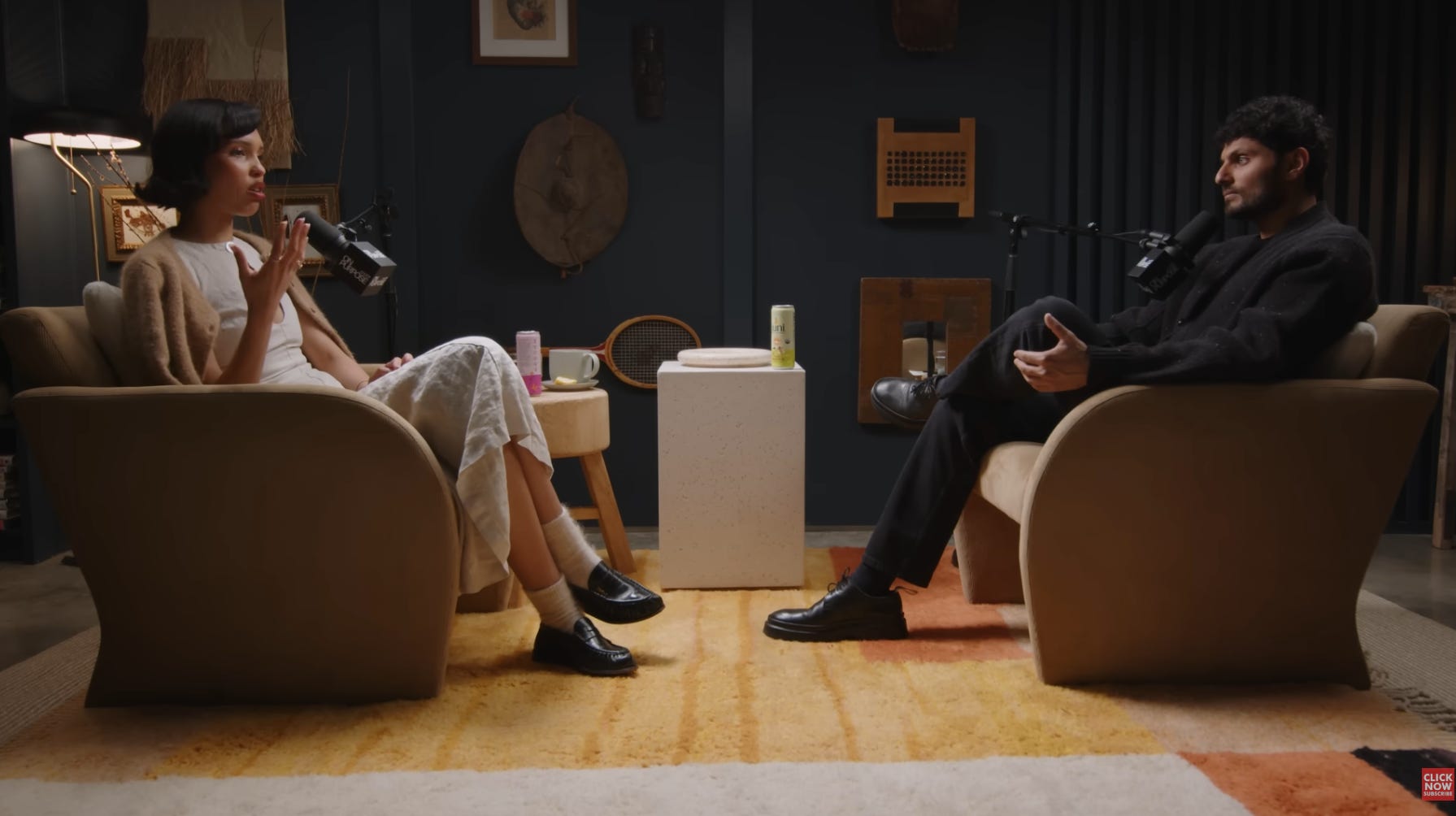
It only felt fitting to wrap up our pre-maternity leave1 regularly scheduled programming with a conversation that comes full-circle from our very first episode, AgriCulture Wars.
Skeptics of the tradwife shtick have long observed that tradwife influencers aren’t actually exposed to the risks of the conservative, traditional lifestyle they’re aestheticizing, because they—presumably—have access to their own money and, with it, some degree of autonomy and optionality.
This summer, the years-long discourse has finally landed where it started, with the accusation—you actually have a job—being wielded effectively as a defense—yeah, this is a job, why is everyone calling me a tradwife? The result is a discursive ouroboros.
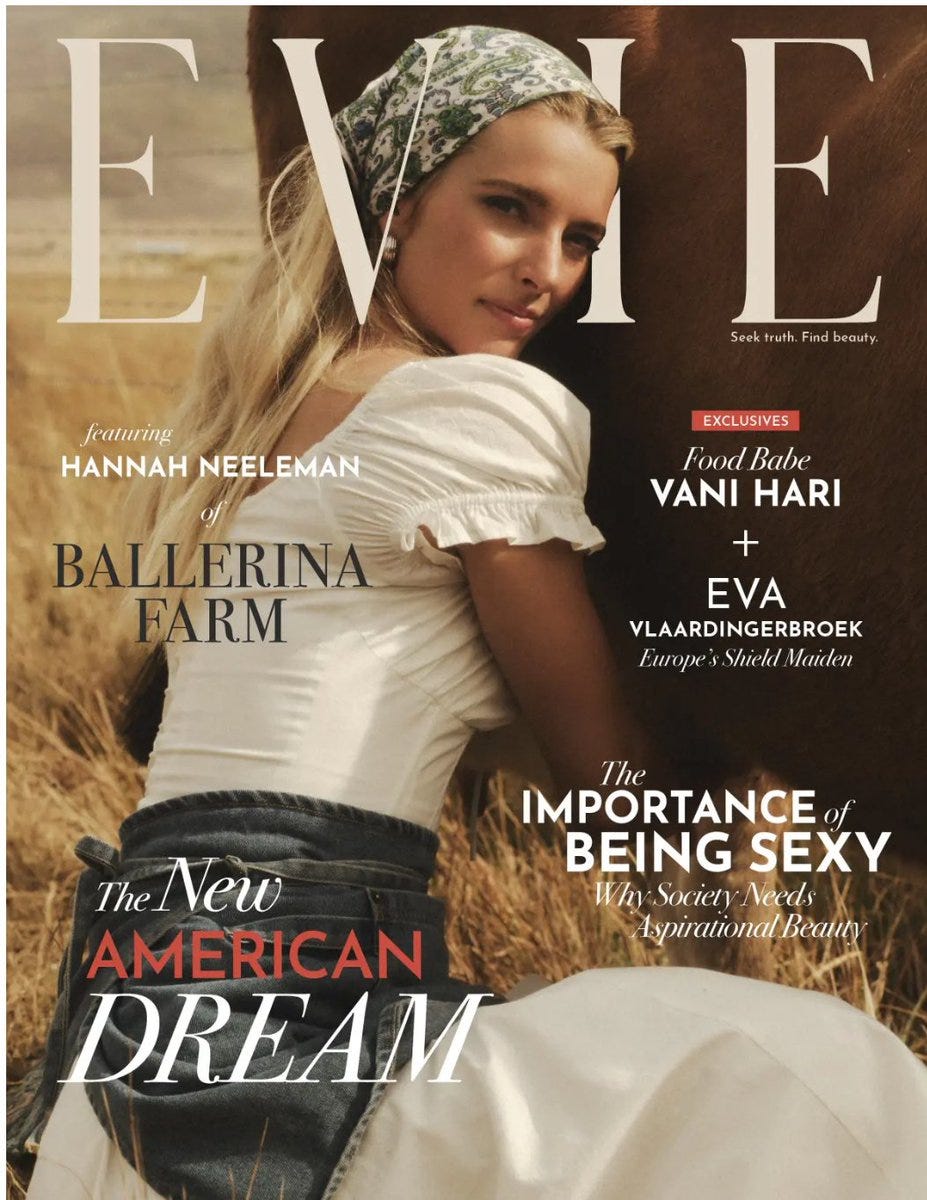
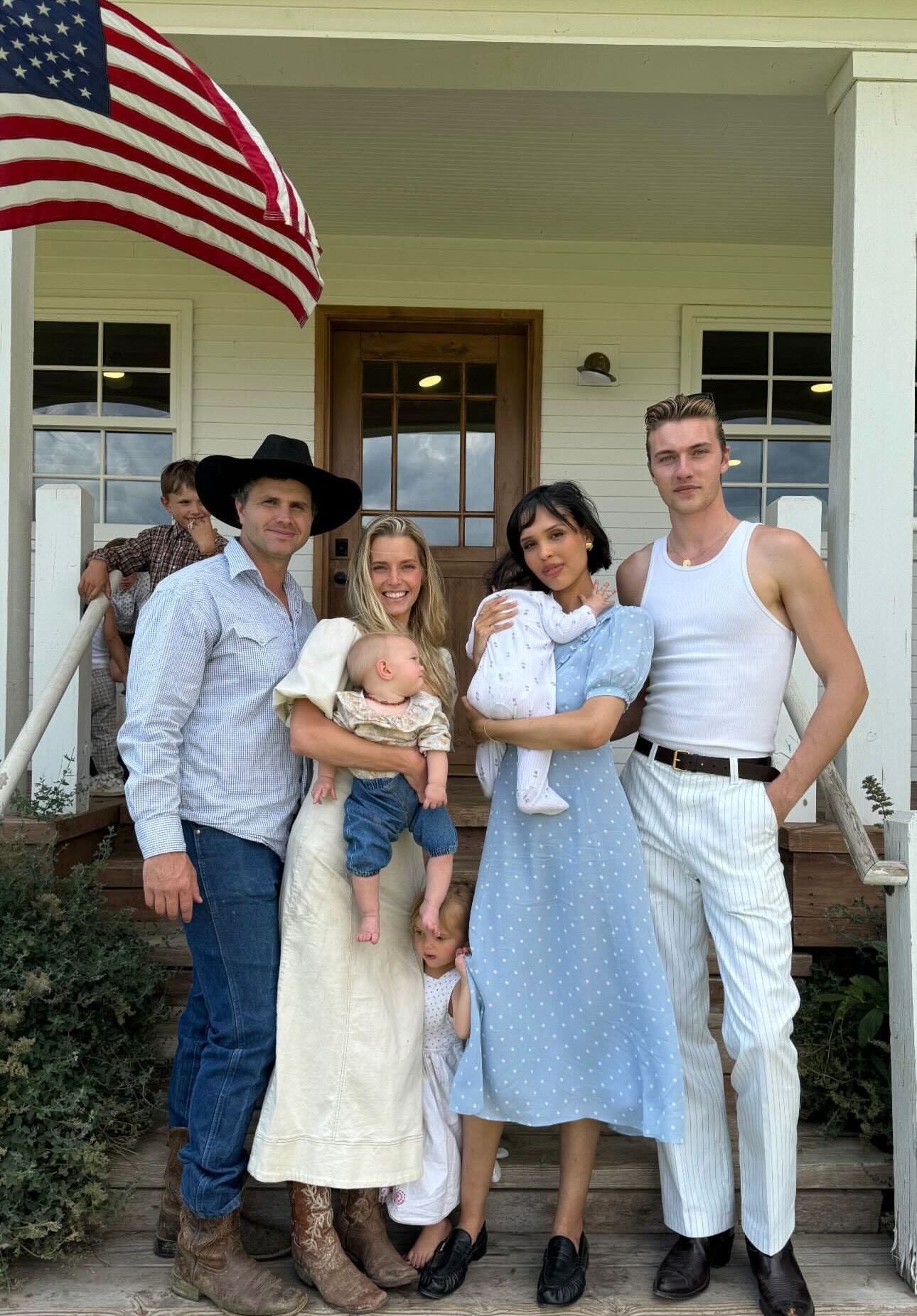
Many fellow Discourse Vultures have perceived Nara Smith and Hannah Neeleman’s disavowal of the tradwife label in recent interviews whilst wearing top-to-bottom denim as proof that this brand of motherhood is no longer in vogue, and that the reality of Smith and Neeleman’s family dynamics (50/50 partnerships, being a CEO) serve as evidence of that shift.
The personal is political, as they say, but how effectively does personal experience really serve as a political defense? Can it nullify the ideological associations of powerful aesthetics, when those aesthetics are already central to American culture?
This episode is a close read of three eerily similar themes that appeared across both recent interviews with some ~lite feminist theory~ layered atop them.
In other words, this episode was brought to you by:

…and nothing else.
And a quick heads-up: Around 1:32:00, we begin discussing postpartum psychosis, depression, filicide, and the Lindsay Clancy trial (no graphic descriptions). If that’s not something you’re up for today, take care and skip ahead to around 1:40:00.

THEORY
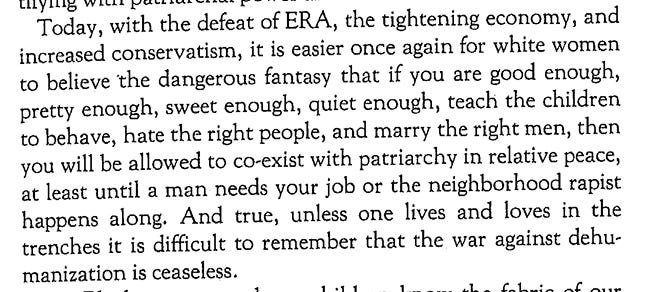
Of Woman Born by Adrienne Rich (1977), the original source from which the “mothering as experience” and “motherhood as institution” framework was pulled
“A review of Adrienne Rich’s Of Woman Born: Motherhood as Experience and Institution” by Alice Braun (2019)
“Institution of Motherhood” from Encyclopedia of Motherhood, edited by Andrea O’Reilly, Andrea (2010)
“Mothering and Motherhood: Experience, Ideology, and Agency” by Min Jao from Comparative Literature Studies (2019)
“Racism and Patriarchy in the Meaning of Motherhood” by Dorothy E. Roberts from Journal of Gender & Law (1992)
“Filicide in the United States” by Phillip J. Resnick from the National Library of Medicine (2016)
Blue: A History of Postpartum Depression in America by Rachel Louise Moran (2024)
“Age, Race, Class, and Sex: Women Redefining Difference” by Audre Lorde (1984)
CLOSE-READ INTERVIEWS
“Nara Smith: Stop Calling Me a Tradwife” from Call Her Daddy (2026)
“Ballerina Farm is Happy with Her Choices” by Stephanie McNeal from Vulture (2026)
OTHER REFERENCED PRESS HITS
“Tycoon or Tradwife? The Woman Behind Ballerina Farm Makes Her Own Path.” by Julia Moskin for the New York Times (2024)
Alyssa Grenfell, the ex-Mormon YouTuber referenced
“The Un-Trad Rise of Nara Aziza Smith” by Bianca Betancourt for Harper’s Bazaar (2024)
“How Lucky Blue and Nara Aziza Smith Made Viral Internet Fame From Scratch” by Carrie Battan for GQ (2024)
“Meet the queen of the ‘trad wives’ (and her eight children)” by Megan Agnew for The Times (2024)
“Ballerina Farm opens its door to visitors” from ABC News (2026)
“The ‘trad wives’ leaving high-control Christian nationalist communities” from CNN (2026)
REFERENCED AESTHETICS
2026: Houston, we have pants


2024/2025: Milkmaidz
AND A LENGTHY & POETIC LAST WORD FROM EULA BISS BECAUSE WHY NOT
Back then, I didn’t fully understand my resistance to calling myself a mother, but I understand it now, and all the more clearly after reading Of Woman Born. What I was resisting was becoming a role, rather than a person. I didn’t want to enter the institution of motherhood. But I was already in it, and I had been raised within it. Day to day, what I felt then about caring for my baby was exactly what Rich recorded in her journal when her children were young: “A sense of insufficiency to the moment and to eternity.” I was overwhelmed by the enormity of the task. Within the institution of motherhood, I felt every emotion Rich noted feeling fifty years before I became a mother—ambivalence, weariness, demoralization, powerlessness, and rage.
[…]
Mothers are more to our families than just workers, and that is the bind. We are lashed to this institution by our own attachments and our own desires. The emotional experience of mothering is among the richest possibilities that motherhood offers. But everything we feel for our children—the tenderness, the awe and delight—can become entangled with everything we feel about the institution of motherhood. That institution is so diffuse, so widespread, so lacking a central office, so without an identifiable authority, that the rage we feel about being trapped within it is sometimes directed, for lack of another outlet, at our own children.
“Every mother has known overwhelming, unacceptable anger at her children,” Rich writes. I’m grateful to her for recognizing this anger, and for knowing that it is shared. What Rich gives us, as mothers, is a model for understanding our own anger in context. Once we understand this anger, it can become useful. “Every woman has a well-stocked arsenal of anger potentially useful against those oppressions, personal and institutional, which brought that anger into being,” Audre Lorde says. One of the uses of anger, she suggests, is undoing the conditions that produced that anger.
—Eula Biss for Literary Hub “on How Motherhood Radicalized Adrienne Rich”
Correction: An earlier episode version included a segment where Caro described Nara Smith as “white passing” when referring to Smith’s proximity to whiteness. Given that the two terms have distinctly different meanings in a conversion about racial dynamics, the segment has been cut for clarity.
everyone tell caro not to forget about me


